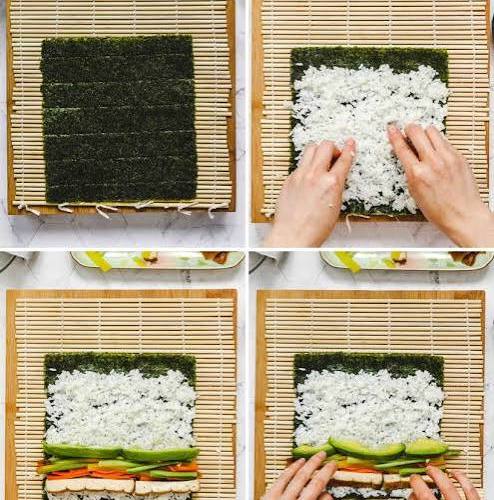
Nori (for rolling), can toast over gas stove for a sec
Spicy mayo (mayo + sriracha)
Make the Sushi Rice
Rinse the rice till the water comes out clean.
Add the strip of nori to the rice and water and cook according to package instructions.
Meanwhile, in a small pot, heat the rice vinegar, sugar, and salt. Cook until sugar dissolves.
While the rice is hot, pour the vinegar mixture over the rice and fold it into the rice, careful not to mush it. Cool and fan the rice as you fold it.
Cool it to room temperature. Don’t put in the fridge.
Make the Egg
Combine 2 tbsp water, sugar, mirin, salt, and 1/4 tsp rice vinegar. Mix until dissolved. Add egg and mix well.
Cook the egg how you like. I go for an omelette style.
Combine
Combine them how you like. They usually serve tamago layered on top of egg and then wrapped in nori, but I sometimes just make it like a regular sushi roll.
2 pounds cauliflower, cut into ½- to 1-inch pieces and florets
⅓ cup plus 1 tablespoon extra-virgin olive oil or melted ghee
¼ cup nutritional yeast
¼ teaspoon red-pepper flakes or pinch of ground cayenne
Kosher salt and black pepper
½ cup panko bread crumbs
Instructions
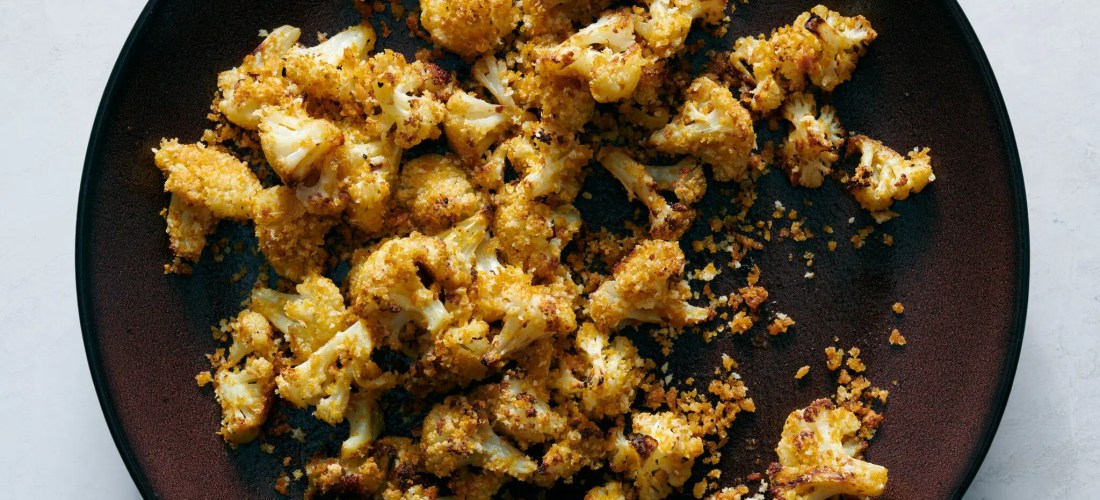
Heat the oven to 450 degrees. On a sheet pan, toss the cauliflower with ⅓ cup olive oil, 1 tablespoon nutritional yeast and the red-pepper flakes. Season generously with salt and pepper, then toss well to evenly distribute. Spread in an even layer and roast for 20 minutes, until the cauliflower is crisp-tender and starting to brown at the edges.
Meanwhile, in a small bowl, stir together the panko, remaining 3 tablespoons nutritional yeast and remaining tablespoon olive oil. Season with salt and pepper, and stir with a fork until evenly combined.
When the 20 minutes are up, stir the cauliflower, spread it into an even layer and sprinkle with the panko mixture. Roast until the panko is toasted, 10 to 12 minutes.
160 grams starter (fed the night before at about 1:3.5:3.5)
19 grams fine sea salt or table salt
Inclusions (for 2 loaves)
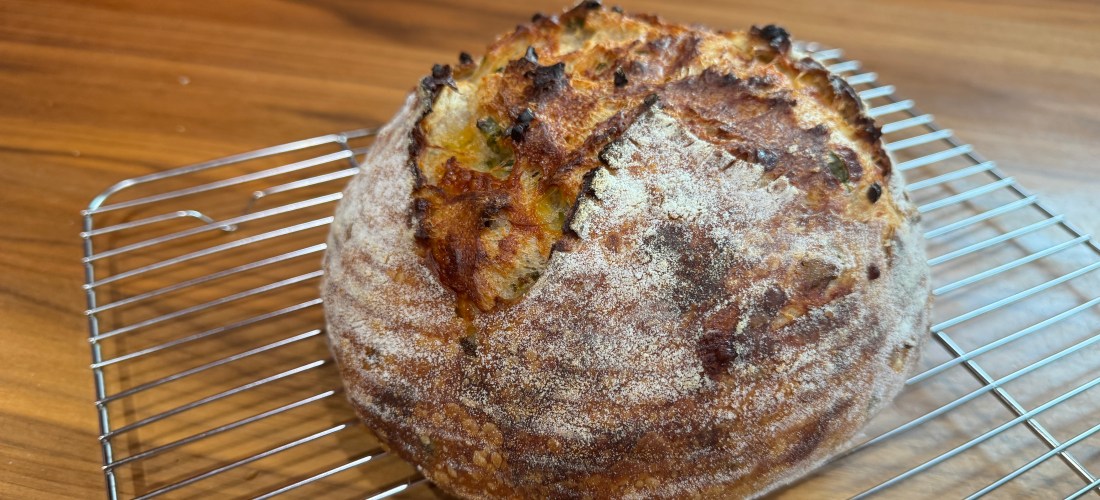
120g jalapeño
126g cheddar cheese
Instructions
Thursday:
Wake up starter Thursday evening
Friday:
Feed starter 1:3.5:3.5 and let sit overnight
Saturday:
Fermentolyse: Stir together the bread flour and whole-wheat flour until combined. Add the water and starter and squish the mixture through your fingers until there are no lumps. Keep squishing until a homogeneous mass forms — it may be shaggy and that’s okay. Using the scraper, scrape down the sides of the bowl and your fingers. –
Cover with a clean kitchen towel and let the dough rest for 10 minutes. –
If doing inclusions get them out now and warming up to room temp (they will change the dough temperature – keeping dough around 79F worked for me) –
Add Salt: Using your fingertips, dimple the dough in the bowl, and sprinkle with the salt. Flip the dough over. —
Start kneading: With the dough in the bowl, use a pull-and-stretch motion to make about 30 kneads, pulling the dough toward the center of the ball. –
Flip the dough back over, cover with a plate large enough to cover the bowl and place it somewhere warm for 10 minutes. –
Repeat, again with no more than 30 kneads to the center.
Flip the dough over, cover and place somewhere warm for about 10 minutes. The dough will start to come together and become a more solid round. –
Repeat a third time, then flip the dough over, cover and let rest somewhere warm for 30 minutes. Windowpane test?– –
Fold the dough (if doing inclusions start adding them here): To do a fold, wet your hands, and then loosen the dough from underneath, stretch, pull up and fold the dough up over on itself. Rotate the bowl and do this 2 more times. –
Cover and let the dough rest 30 minutes. –
Repeat, and continue this for 2 to 3 hours, folding every 30 minutes and adding in inclusions, until the dough doubles in size (or 50% rise at 75F could take 7 hours or 30% rise at 80F 4ish hours) is fine, double might be too long) –
Dough should be bubbly, jiggly, stay together when pulled from the side and not go back immediately –
First shaping: Very lightly dust the counter with some flour and transfer the dough to it. Divide the dough in half and gently flatten each half. –
Let the dough rest on the counter for 15 minutes. –
Second shaping: shape again, minding the same top and bottom. So you’ll want to flour the top, then flip it flour side down on the counter and go again. –
Lay seam side up (make sure bottom is fully sealed w/pinching for good open spring) in rice-and-wheat flour covered bannetons and put in fridge. –
Sunday:
Baking day: Position the baking rack in the middle of the oven, place a large Dutch oven with a lid in the oven, and preheat to 500 degrees for at least 45 minutes (preheating inside of dutch oven takes longer than oven). Cut a large square of parchment paper and have it ready on the counter. –
Remove one of the doughs from its basket by quickly turning it over onto the parchment, and leave the other one in its basket in the refrigerator. –
Dust with rice flour! Then, using a baker’s lame or a pair of kitchen scissors, score the loaf quickly in just one move — an arc of about a 45-degree angle works well. –
Carefully take the Dutch oven out of the oven and remove the lid. Lower the dough in its parchment sling/liner into the Dutch oven and recover with the lid. Return the Dutch oven to the oven and reduce the heat to 450 degrees. Bake with the lid on for 20 minutes, and then remove the lid and continue to bake an additional 15 to 20 minutes, until the bread is golden brown and sounds hollow when tapped. Transfer the bread to a wire rack, and reserve the parchment paper.
2 tablespoons (40g) dark molasses (x2 = 1/4 cup, 80g)
1 cup (106g) medium rye flour(x2 = 212g)
Currently at 405
Instructions
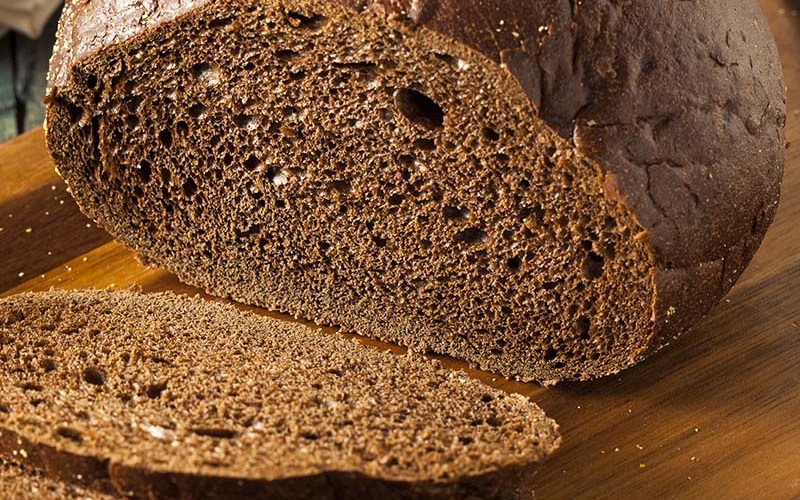
Add 1 cup bread flour, cocoa powder, sugar, salt, onion powder, caraway seeds, and yeast to stand mixer bowl; whisk to combine. Add coffee, oil, and molasses to flour mixture. Mix with paddle attachment for 4 minutes on medium speed.
Switch to dough hook attachment. Gradually add rye flour and enough of the remaining bread flour to form a firm dough. Knead until smooth and elastic, about 5 to 7 minutes.(NOTE: For hand mixing: following above steps, mix ingredients in large mixing bowl using a wooden spoon or dough whisk. Knead on floured surface until smooth and elastic.)
Place dough in lightly oiled bowl and turn to grease top. Cover; let rise until indentation remains after poking dough with finger down to second knuckle, about an hour.
Turn dough onto lightly floured surface; punch down to remove air bubbles. On lightly floured surface, shape dough into a round loaf. Place on lightly greased cookie sheet or in 8-inch layer cake pan. Cover; let rise in warm place until indentation remains after touching (about 30 minutes).
Preheat oven to 400°F.
Bake for 30 to 35 minutes. Remove from pan; cool before slicing.(Optional: Combine 1/4 cup water and 1/2 teaspoon cornstarch; heat to boiling. Five minutes before the loaf is finished baking, remove from oven and brush top with cornstarch glaze. Sprinkle with caraway seeds, if desired. Return to oven and bake approximately five more minutes until glaze is glossy and loaf sounds hollow when tapped.)
In a medium sized bowl, mix the yeast with the lukewarm water. Whisk together until dissolved and creamy looking.
Add the malt, sugar and flour and using a wooden spoon, stir together until it is smooth. This is pretty sloppy mixture. Leave this to rest while you get the rest of the ingredients ready. Can leave longer if you like. Original recipe person left this overnight.
In a small bowl whisk yeast into tiny amount of water until the mixture looks creamy and set aside.
In a largish bowl, mix together the flours, caraway seeds and salt.
Spoon the yeast mixture on top of the starter. Then carefully spoon the flour mixture overtop of that. Cover the bowl and place it in a warmish no-draught area (oven with only the light turned on in winter; counter in summer). Leave it for 4 hours. Beranbaum notes that some of the starter might begin to ooze up through the flour mixture but not to worry if it does. Don’t worry if it doesn’t either.
After the 4 hours is up, add the oil. Using a wooden spoon, stir everything together until the dough pulls away from the bowl and the flour is pretty much encorporated. Cover and set aside to sit on the counter for about 20 minutes.
Turn the dough out of the bowl onto an unfloured work surface. Wash and dry the bowl. This prepares the rising bowl AND gets your hands clean.
Without adding any extra flour, knead the dough until it is silky (about 10 minutes). Let your dough scraper (a spatula works) be your friend if the dough is sticking to the board. Keep scraping any dough that is on the board so the board is always clear. If the dough seems too sticky (this can happen with rye flour mixtures) add traces of all purpose flour. Add as little extra flour as you can.
Put the dough in the clean mixing bowl. No need to oil the bowl or the dough!! (Beranbaum says to oil the bowl AND the top of the dough) Cover and allow to rise in a no-draught area (warm room temperature) until it has doubled.
When the dough has doubled, you can either gently push the dough down or you can shape the dough. A good way to tell if the dough has doubled is to wet your finger and poke a hole in the top of the dough. If the hole fills up, it hasn’t risen enough. If there is a whoosh of air and the dough deflates a little, it has risen too much. If the hole stays in exactly the same configuration and the dough remains otherwise intact, it is ju-u-st right.
If your kitchen is cold and it’s already rather late in the day when the dough has doubled, gently push the dough down, cover it and put it in the fridge overnight. Take it out the next morning and let it sit for an hour or so to bring it up to room temperature.
Shaping: To shape the bread, turn the dough out onto a very lightly floured board. Divide it in two even pieces (eyeball the cut; it doesn’t matter if it’s exact). Gently, but firmly, pat each piece into a narrow rectangle. Fold each one like a business letter: the top third down to the middle and the bottom third up to the top edge. Roll like a jelly roll and seal the seam. Place them seam side down on a parchment covered peel. Cover with a clean tea towel and a plastic bag overtop. Allow the loaves to rise until they have almost doubled (about an hour and a half). To test, flour your finger and press gently on the edge – it should very slowly spring back. For comparison, try pressing early on to see how it quickly springs back when the dough has not risen enough.
Baking: Twenty minutes before you are going to bake, put a breadstone onto the middle rack and turn oven to 450F. (If you don’t have a bread stone, you can bake the bread on a cookie sheet.)
Just before putting the bread in the oven, use a wet serrated knife to slash the tops. Then spray the loaves liberally with water. Put the bread in the oven. Immediately turn the oven down to 400F. Bake the loaves for about 30 minutes until they are hollow sounding on the bottom. Turn the bread around once to account for uneven heat in the oven.
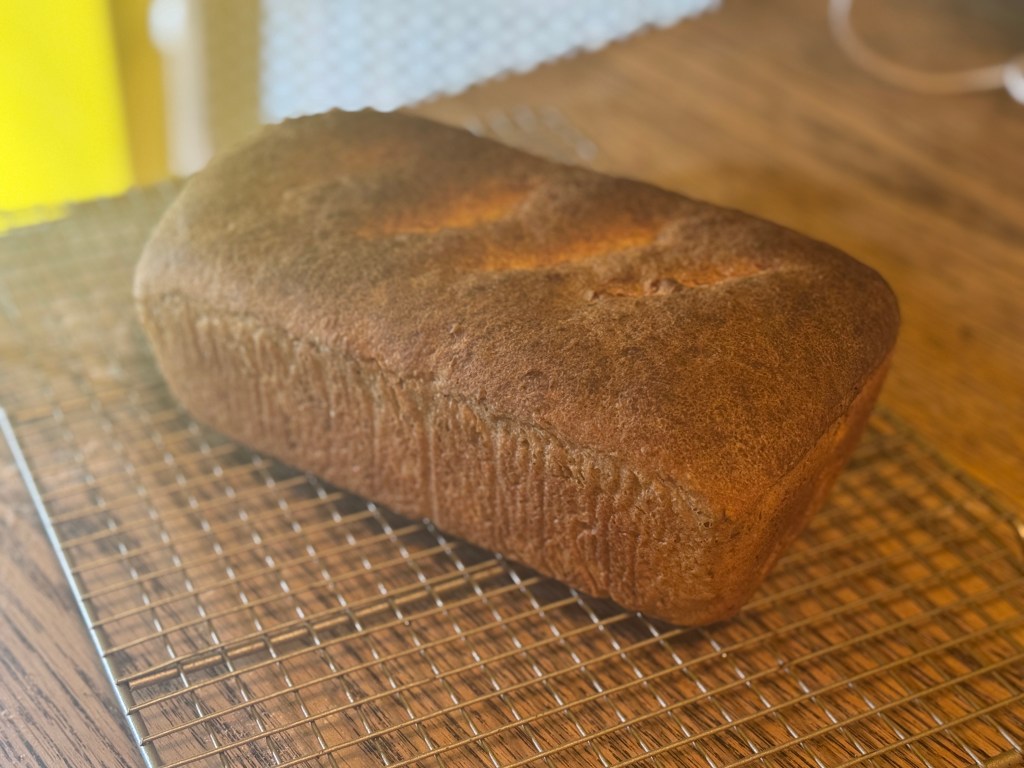
Remove the bread from oven and allow to cool on a well ventilated rack. Wait til they are cool before cutting them. They are still continuing to bake inside!****
5 tablespoons extra-virgin olive oil, divided, plus more for drizzling
2 garlic cloves, finely chopped
3 (15-ounce) cans chickpeas, undrained
1 tablespoon lemon zest (from 1 large or 2 small lemons)
¼ cup lemon juice (from 1 large or 2 small lemons)
1 cup finely grated Parmesan, plus more for topping
Salt and pepper
8 ounces burrata, drained
Handful basil leaves
Sourdough or baguette, for serving
directions
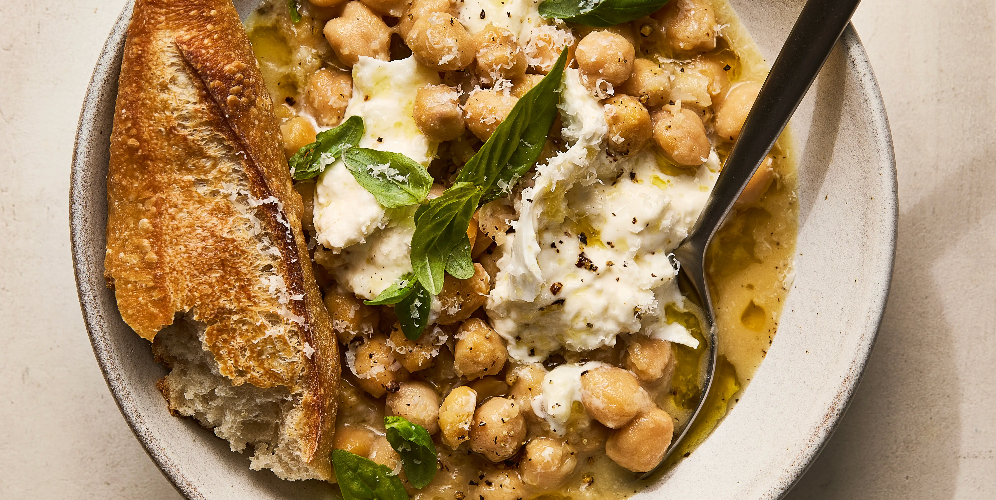
Heat a deep, medium skillet or pot over medium-high. When hot, drizzle with 1 tablespoon of olive oil; add the garlic and cook until fragrant, 15 to 30 seconds. Stir in the chickpeas and their brine, then bring to the boil. Let the brine bubble rapidly until it has reduced and thickened, 8 to 10 minutes. Reduce heat to low, add the lemon zest and stir for 1 minute.
Meanwhile, to a large bowl, add the lemon juice, Parmesan and the remaining ¼ cup of olive oil.
Add the chickpeas and the reduced brine to the Parmesan-lemon mixture and stir continuously until the cheese has melted and the sauce is thick but still loose. Taste and season with salt and pepper.
To serve, divide among bowls and drizzle with more olive oil. Tear the burrata over the top and sprinkle with the basil leaves and more Parmesan. Serve with bread.
2 vegan beef-flavoured bouillon cubes dissolved in 3 cups hot water, or cups low-sodium vegetable stock
¼ cup vegetable oil
2 tbsp low-sodium tamari or soy sauce
2 tbsp apple cider vinegar
1 tbsp tomato paste
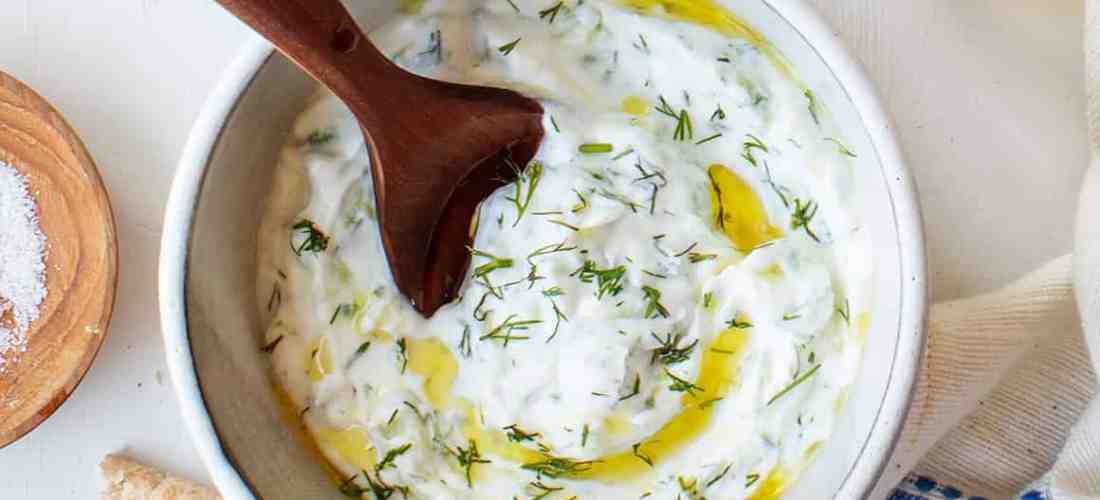
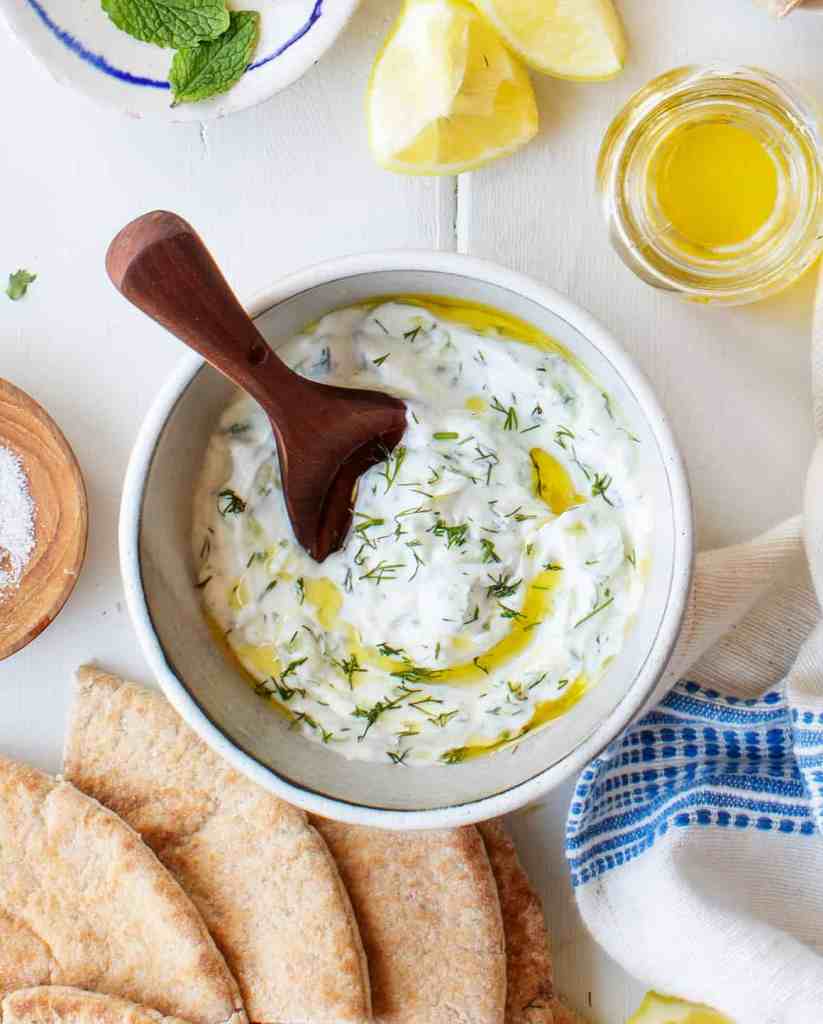
For the tzatziki:
½ cup finely grated cucumber
1 cup thick whole milk Greek yogurt
1 tablespoon fresh lemon juice
½ tablespoon extra-virgin olive oil
1 garlic clove, grated
¼ teaspoon sea salt
1 tablespoon chopped fresh dill
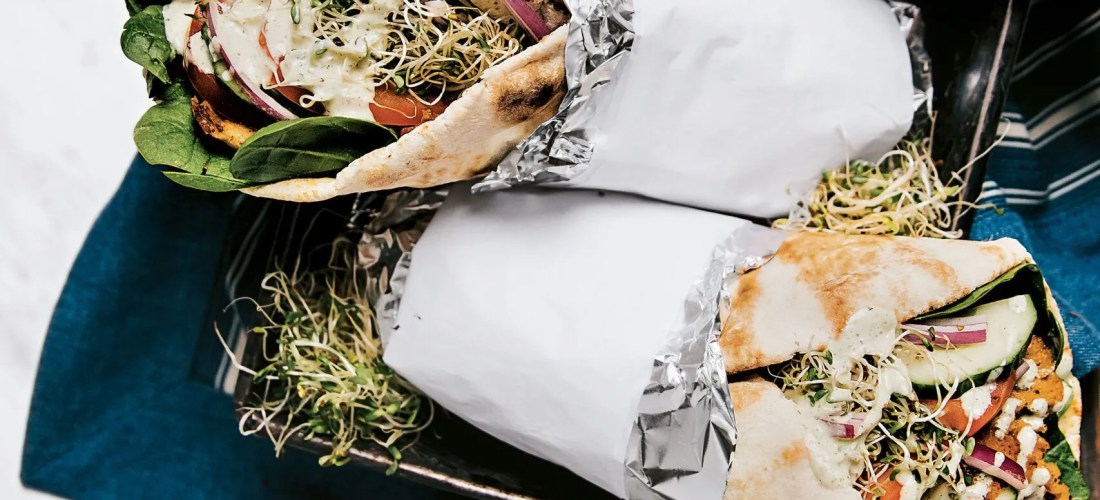
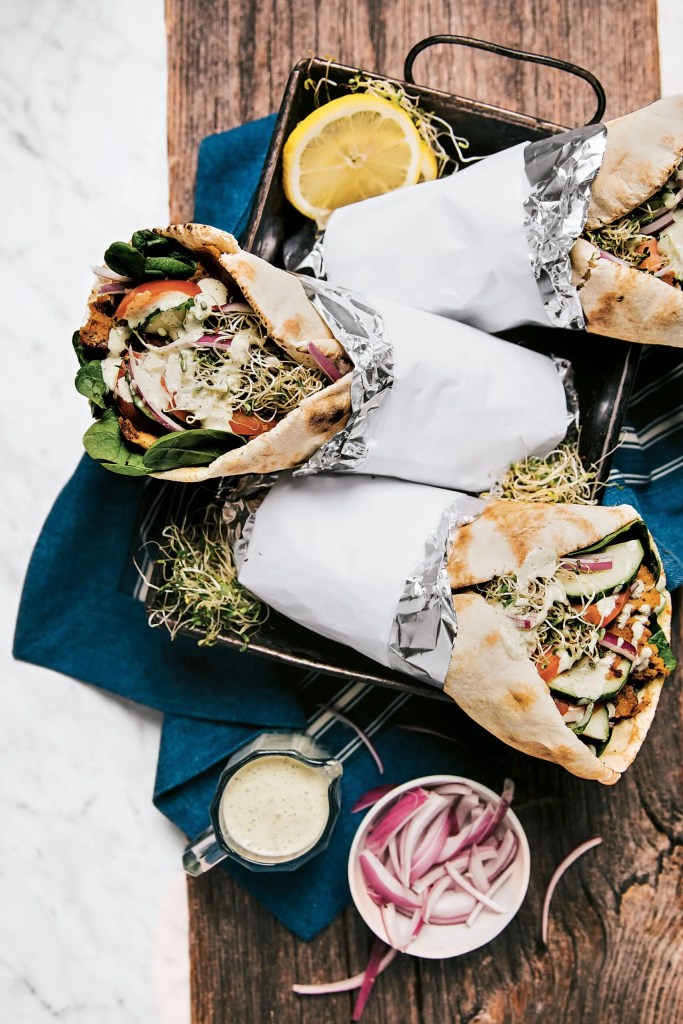
directionsfor seitan gyros
For the seitan, preheat the oven to 350°F.
In a large bowl, combine the wheat gluten with the nutritional yeast, spices, and herbs.
In another bowl, mix together the stock, vegetable oil, tamari, vinegar, and tomato paste until well combined.
Pour the stock mixture into the wheat gluten mixture and stir to combine.
The mixture should be very moist, but still able to be handled as one large piece. It should not be sticking to your hands, but should be quite slippery. You will feel the elasticity of the gluten binding it together into a blob. Place the dough on a clean work surface and knead, pulling and stretching it and folding it over itself a few times. Finally, press it together to form large log shape approximately 10 inches long and 5 inches in diameter.
Wrap the log tightly in a large piece of heavy-duty aluminum foil. You may need to use 2 sheets to make it completely secure. There should be no exposed gaps. Tighten and twist the ends of the foil.
Place the log on a baking sheet and bake for 90 minutes. It should feel very firm when you take it out of the oven. Allow the log to cool at room temperature. Store in the fridge overnight before using it for sandwiches.
The seitan is best sliced very thin with a sharp knife or shaved using a mandolin.
Store the seitan in the fridge and consume within 10 days. Or it can be portioned and wrapped to freeze for longer storage, up to 2 months. Thaw completely before slicing and using in sandwiches.
directionsfor tzatziki:
Place the cucumber on a towel and gently squeeze out a bit of the excess water.
In a medium bowl, combine the cucumber, yogurt, lemon juice, olive oil, garlic, salt, dill, and mint, if using. Chill until ready to use.
*She serves this with a red pepper sauce, a recipe for which she includes in her book 🙂
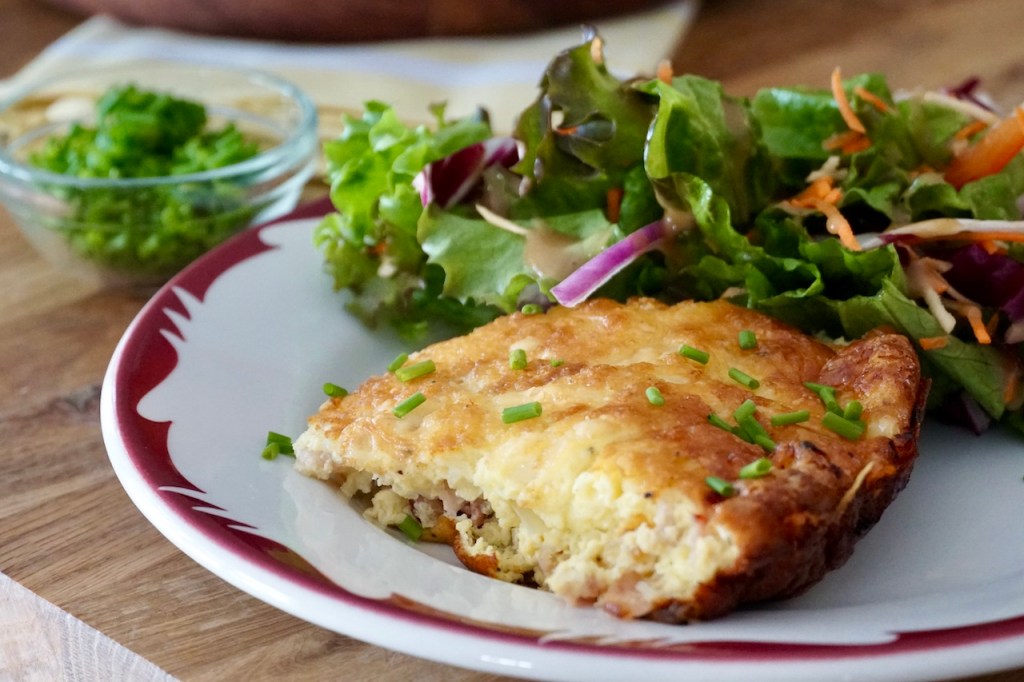
**Here’s a tidbit from Mushet’s two-page primer on souffles: “When whipping egg whites, make sure that your mixing bowl and whisk or beaters are perfectly clean. Begin whipping on low to medium-low until the whites look frothy, then turn the mixer to medium and beat until the whites hold soft peaks when the whisk is lifted from the bowl… If you are not adding sugar, be very cautious when whipping to firm peaks because it’s easy to go too far without the added moisture and elasticity of sugar. You can save overbeaten whites by adding another egg white to the mixture and stirring it until well incorporated, but since the ratio of ingredients is now out of whack and the whites are not at their optimum volume, your souffle will have a tenser texture and will not rise as high as expected.
3 tbsp unbleached all-purpose flour
2 tbsp fine cornmeal
1/8 tsp smoked paprika
1/2 stick unsalted butter, cut into pieces
1 tsp minced garlic (about 1 medium clove)
1 1/2 cups whole milk
2 cups fresh corn kernels (about 3 ears)
1/4 cup (1 oz) finely grated parmesean cheese
1 tbsp chopped fresh basil
1 tsp salt
5 large eggs, separated, plus 1 additional egg white
1/4 tsp cream of tartar
directions
My Advice: Get everything ready and measured before beginning. You definitely need to work quickly once you’ve started a souffle.
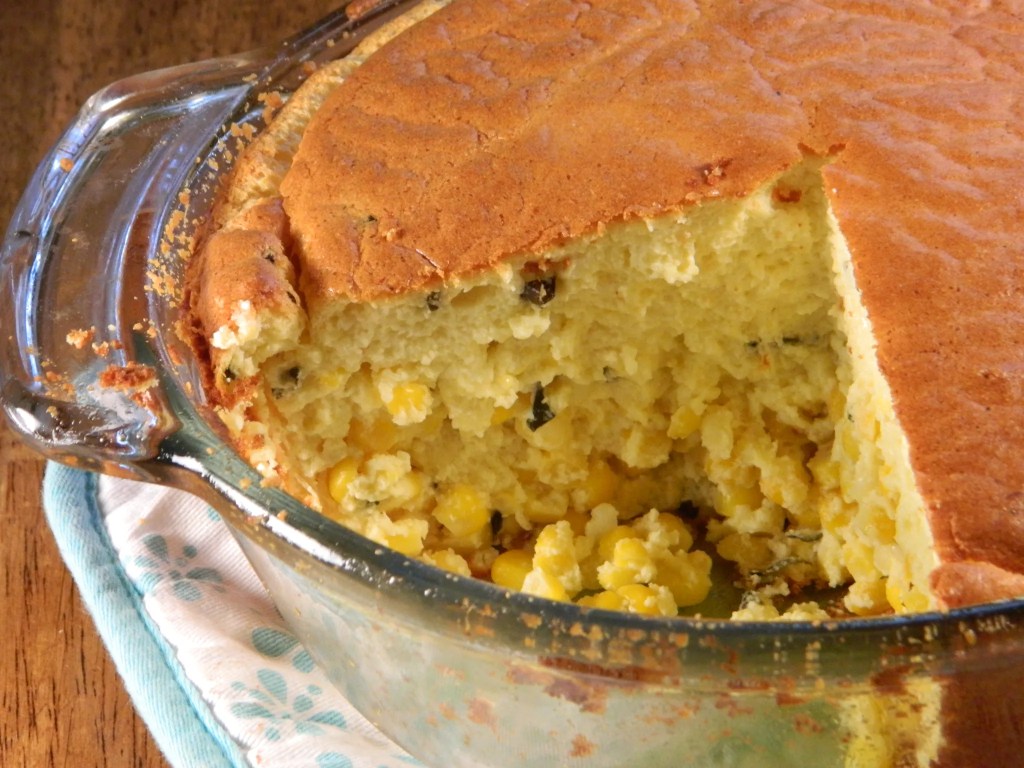
Make the bechamel: In a large bowl, whisk together the flour, cornmeal, and paprika. Melt the butter in a medium saucepan over medium heat. Add the garlic and cook, stirring occasionally, until fragrant, about 1 minute. Remove from the heat, add the flour mixture, and whisk well to remove any lumps. Return to the heat and cook for 1 to 2 minutes, whisking constantly. Remove from the heat again and add the milk slowly, whisking constantly to remove any lumps. Return to the heat and bring to a boil, whisking constantly. Boil for 1 to 2 minutes, then add the corn kernels and continue to cook through. Remove the heat and whisk in the Parmesean, basil, and salt. Whisk in the egg yolks and transfer to a large bowl. Set aside.
Preheat the oven to 400F and position an oven rack in the bottom third. Generously butter the souffle dish (71/2 cup dish), coat it with finely grated Parmesan, and tap out the excess.
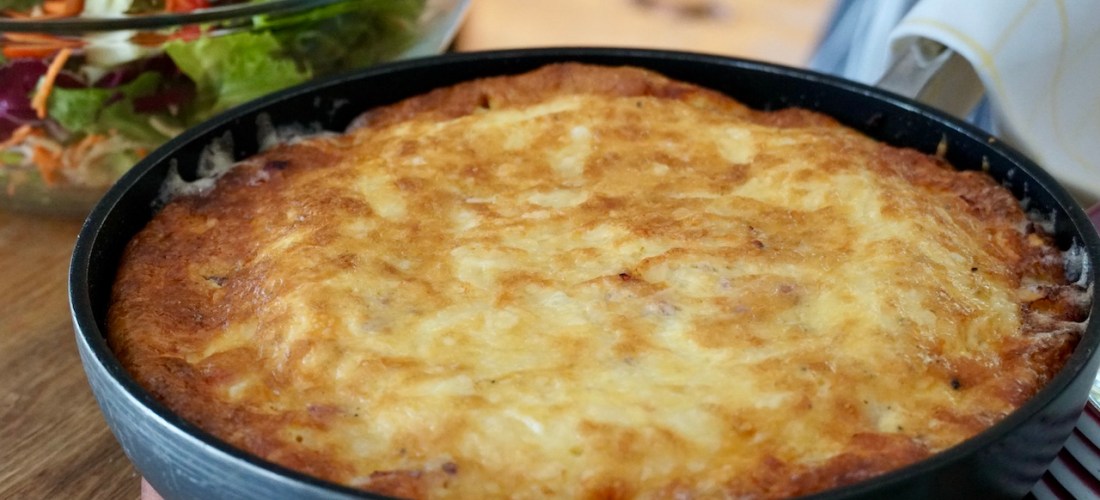
Whip the egg whites: In the very clean bowl of the stand mixer, whip the 6 egg whites and the cream of tartar on medium speed until they form firm peaks. You may also use a hand mixer and a medium bowl. Be careful not to overbeat. With the spatula, gently stir in one-fourth of the egg whites into the bechamel to lighten the mixture. Fold in the remaining whites until there are no more streaks of whites.
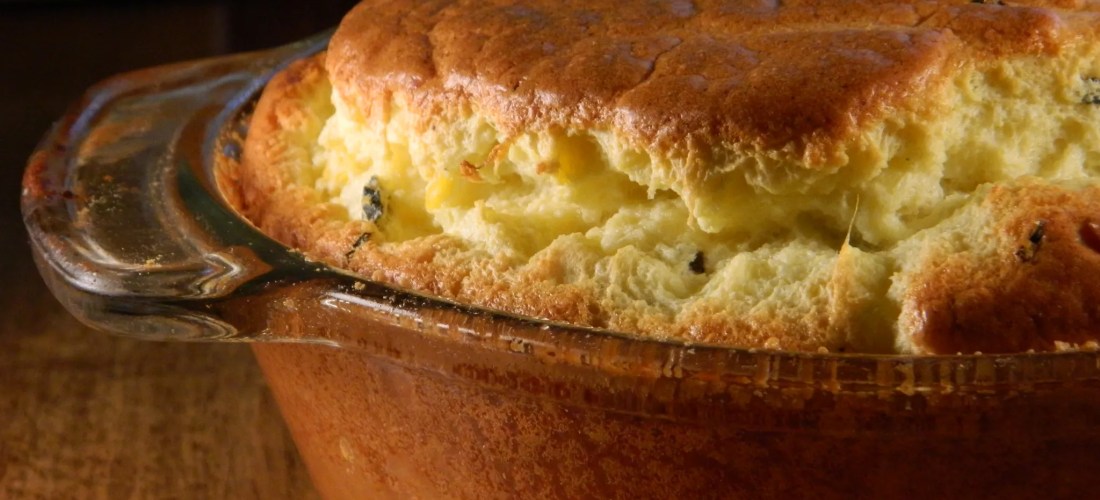
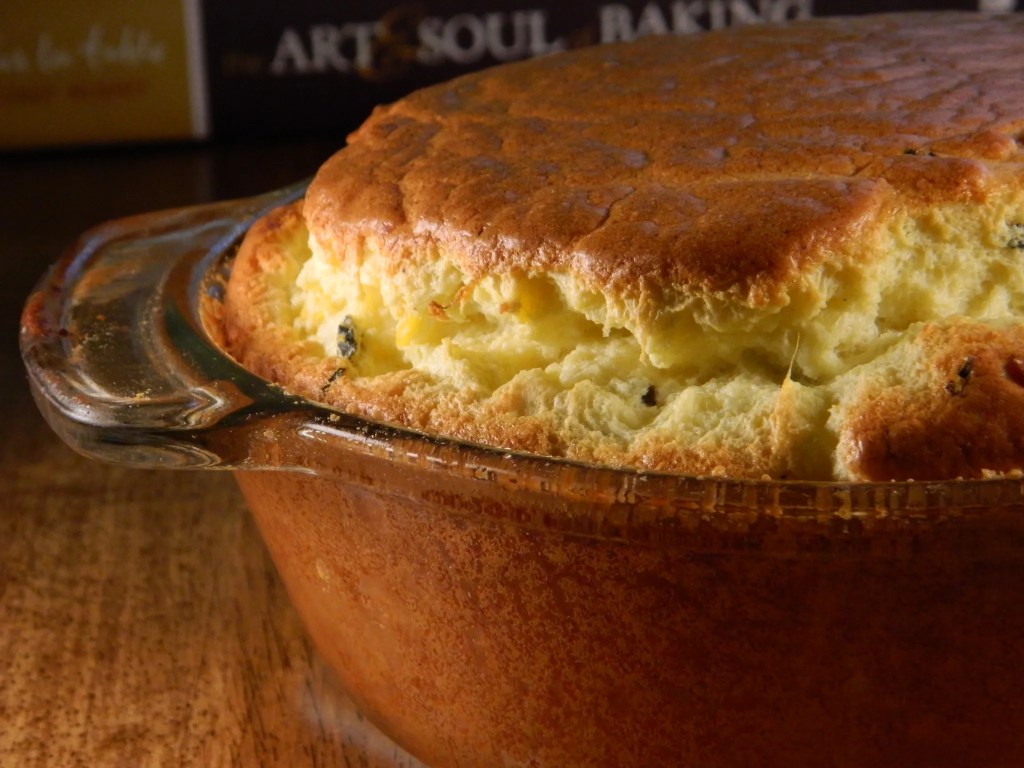
Fill the Dish and Bake: Transfer the batter to the prepared baking dish and place on the baking sheet. Bake for 20 minutes, then reduce the oven temperature to 375F and bake for 18 to 22 minutes longer, until set and firm to the touch.